► AI Can’t Save Your Infrastructure: Why Lorikeet Wins the Post-AI Pentest Battle
Quick Comparison Table...
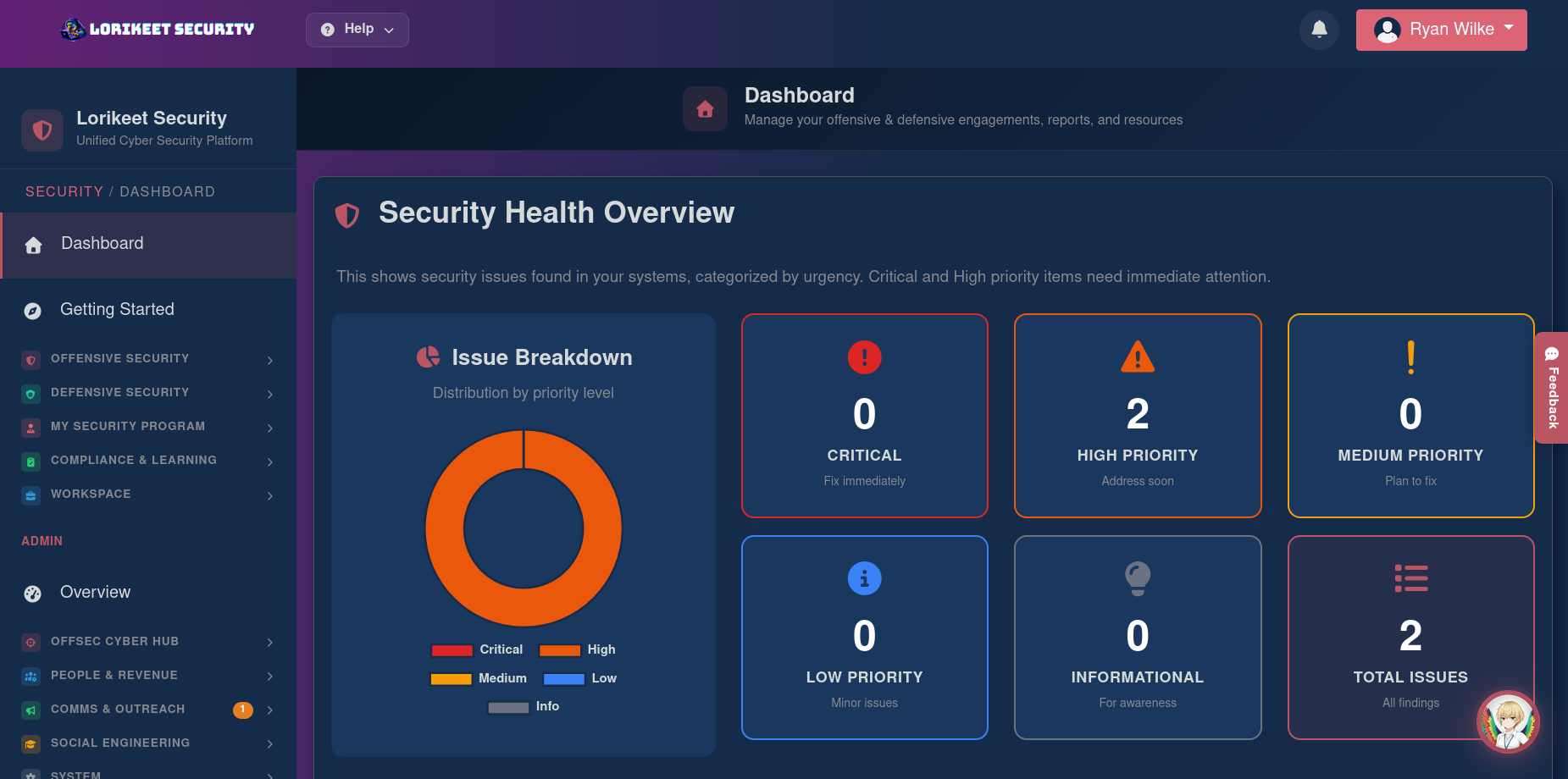
[ Device Preview - Lorikeet Security Case Study ]
════════════════ DEVICE SPECIFICATION ════════════════
AI closed your XSS; who’s closing your TLS? The real battleground of modern pentesting
AI-assisted code review is eating the low-hanging fruit. From what I’ve seen over 15 years, that doesn’t kill pentesting—it changes where the wins are. Lorikeet Security’s Flowtriq case study shows the pattern I’m seeing across my Category Indexes: after an AI pass nukes source-level bugs, the remaining risk lives in runtime, infrastructure, and configuration—territory where manual, practitioner-led testing shines. In an era of Claude, Cursor, and Copilot, Lorikeet positions itself as the offensive layer that validates the AI halo, not one that competes with it.
Quick Comparison Table
| Feature | Lorikeet Security Case Study | Bishop Fox | Cobalt |
|---|---|---|---|
| Pricing | Project-based pentests or PTaaS subscription; mid-market friendly; compliance-aligned scopes | Enterprise-priced retainers and PTaaS; premium for depth and breadth | Subscription PTaaS with predictable credits; SMB to mid-market sweet spot |
| Ease of Use | Modern PTaaS portal with live findings, real-time chat, integrated reporting | Polished enterprise platform; heavier onboarding, robust governance | Lightweight portal geared to fast scheduling and repeatable testing |
| Developer Tools Features | AI-native focus; manual runtime/infrastructure coverage; Attack Surface Management; vCISO; SOC-as-a-Service | Deep service catalog (red/purple team, cloud, IoT); mature methodologies | Rapid retesting, marketplace talent, and workflow-friendly reporting |
| Integration Options | Portal-first; limited public claims on ticketing/ALM integrations; real-time collaboration | Enterprise integrations and formal remediation workflows common | Well-known for developer tool integrations and API-centric workflows |
Case study: https://lorikeetsecurity.com/blog/flowtriq-case-study-ai-audit-pentest-gap
Where Lorikeet Security Case Study Wins
- ►AI-native risk focus that complements modern SDLCs
- ►Flowtriq ran an AI audit that closed XSS, SQLi, template injection, and weak crypto—yet Lorikeet still found five residuals in session management, TLS posture, filesystem hygiene, and reverse-proxy headers. This is exactly the class of issues AI is structurally poor at seeing. Versus Cobalt’s velocity-centric model, Lorikeet’s narrative is sharper for AI-heavy teams who want post-AI validation.
- ►Practitioner-led signal quality with real-time collaboration
- ►In my Tool Profiles, developer teams reward faster triage loops. Lorikeet’s PTaaS portal emphasizes live findings, real-time chat, and integrated reporting. While Bishop Fox offers a comprehensive enterprise experience, Lorikeet’s immediacy and conversational remediation flow can cut mean-time-to-fix for lean platform teams.
- ►Compliance without losing offensive rigor
- ►Many teams need SOC 2, HIPAA, PCI-DSS, HITRUST, or FedRAMP-aligned testing. Lorikeet aligns scopes to compliance evidence while still prioritizing runtime/infrastructure flaws that actually burn you in production. For mid-market SaaS and AI startups, that balance is often tighter than the large-enterprise tilt I typically see with Bishop Fox.
Where Competitors Have an Edge
- ►Scale and brand gravity
- ►If you’re a Fortune 100 with sprawling estates, Bishop Fox’s breadth, mature governance, and specialty teams (red/purple, IoT, cloud, and more) are hard to match. Similar story with NCC Group or Trail of Bits for deep specialty work.
- ►Always-on breadth via crowdsourcing
- ►If you need continuous, broad-surface coverage with a massive tester pool, Cobalt’s marketplace model—and alternatives like Synack or HackerOne—bring scale and diversity of viewpoints that a focused firm may not match.
- ►Enterprise integrations and program governance
- ►Large programs often need SIEM/GRC hookups, complex approval workflows, and executive-grade reporting. Enterprise incumbents typically come pre-baked here.
Best Use Cases for Developer Tools
- ►
Choose Lorikeet when:
- ►Your developers already use AI code review and you want to validate runtime, infra, and configuration risks that AI misses.
- ►You’re mid-market SaaS, fintech, healthcare, or an AI company needing compliance evidence tied to practitioner-grade findings.
- ►You want a PTaaS portal with live findings and real-time back-and-forth to accelerate remediation.
- ►
Choose Bishop Fox when:
- ►You need premium depth across diverse assets, advanced adversary simulation, or complex enterprise governance and reporting.
- ►
Choose Cobalt (or similar crowdsourced PTaaS) when:
- ►You prioritize fast scheduling, repeatable testing across many apps, and predictable subscription economics with broad tester reach.
The Verdict
Manual scheduling isn’t dead—manual assumptions are. In 2026, AI will close your code-level vulns; the remaining risk shifts into the cracks of session state, TLS posture, proxies, and cloud configuration. Lorikeet is one of the New Additions to my Comparison Tables that “gets” this shift. If you’re an AI-native dev org or a compliance-driven startup that wants offensive validation layered over AI, Lorikeet is a strong pick. If you’re a global enterprise needing massive scale, specialty research, or heavy governance, look to Bishop Fox or a crowdsourced platform—and pair it with targeted runtime-focused assessments to cover the gaps.